What Shapes the Cost of a Retaining Wall
Two walls that look similar from the street can be very different jobs once you account for what's underneath.
October 15, 2026 · 4 min read
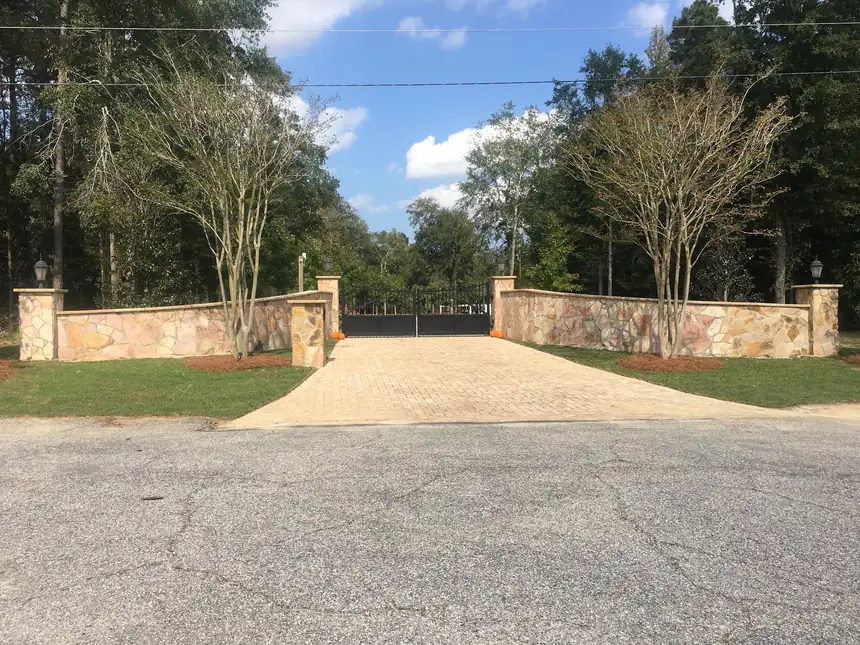
One of the most common questions we hear is some version of, how much does a retaining wall cost? It's a fair question, and a hard one to answer over the phone. Two walls that look nearly the same from the street can be completely different jobs once you account for the ground they sit in and the water they have to handle.
John Bosse has written a guide on this subject for South Carolina homeowners, and the factors in it match what we see on real properties from Aiken to Orangeburg. We're not going to throw numbers at you here, because a number without a site visit is a guess. What we can do is explain what moves the price up or down, so you know what to expect when we come out.
Height and length
The two obvious ones come first. A longer wall needs more material and more labor. A taller wall is a different matter, because it holds back a lot more soil, and the force on a wall climbs quickly as the height goes up. A low garden wall that edges a bed is one kind of job. A wall that holds up a hillside or a driveway is another, with a deeper base, heavier material and more attention to how it's built.
That's why a modest increase in height can change the scope of the work more than you'd expect. We'll measure the full run and the tallest point, because the tallest section is what the whole design has to answer to.
Material
What the wall is made of shapes both the look and the price. Natural stacked stone, cast concrete block, brick and combinations of them all cost different amounts to buy and different amounts of time to set. Natural stone is cut and fitted piece by piece. Engineered block goes up faster and more uniformly. Some homeowners want the wall to echo the brick on the house, which is a design choice we're happy to build around.
The finish matters too. A capped top, rounded corners, integrated steps or a seat ledge all add craftsmanship and time. None of that is wasted, but it's worth deciding early what you want the wall to do besides hold dirt.
Soil conditions and layout
Soil is the factor you can't judge from the driveway. Firm, well-draining ground gives a wall a good place to stand. Soft, wet or loose soil may need more excavation, more base material or extra reinforcement before the first course goes down. We look at the ground itself before we commit to a design.
Layout counts as well. A straight run is simpler than a wall with curves, corners, steps or multiple tiers. A curved wall can look wonderful, as you'll see in some of our garden work, but every curve takes more careful cutting and fitting. If the wall has to wrap around a tree, a utility box or a patio edge, that gets planned in too.
Accessibility
How we get materials and equipment to the wall affects the job. A site with open access from the road is easy. A backyard behind a narrow gate, a steep side yard or a spot where machinery can't reach means more hand-carrying and more time. Stone is heavy, and every extra step between the delivery and the wall adds up.
Drainage
Drainage is the part of a wall that you'll never see, and the part most worth paying for. A wall that holds back soil without a plan for the water behind it is working against itself. Proper drainage means a layer behind the wall that lets water move, a path for it to leave, and attention to where the runoff goes once it's out. Our approach to retaining walls includes drainage as part of the build, not an add-on.
Prep work
The last factor is everything that happens before the wall goes up. Removing an old failing wall, clearing brush or roots, cutting back a slope, hauling away soil, and setting a level base are all part of the job. Sometimes prep is a small share of the work. On a property with an older wall that has collapsed, it can be a big share.
Here's a quick summary of what we'll be looking at when we visit.
- How tall the wall needs to be at its highest point, and how long it runs
- The stone, block or brick you want, and how it should be finished
- What the soil is like and how complicated the layout is
- How easily we can get materials and equipment to the site
- Where the water comes from and where it needs to go
- What has to be cleared, removed or reshaped before building starts
Why we price after a visit
Put those six factors together and you can see why a price from a photograph or a phone description would be a coin flip. Either it would be padded to cover the unknowns, or it would be low and then change once we're digging. We'd rather walk the property, look at the slope and the soil, talk through what you want, and give you a number you can rely on.
If you're thinking about a wall in Williston, Aiken, Augusta or anywhere in our service area, call (803) 300-3734 or send a message through the contact page, and we'll set up a site visit. Your price comes after that visit.
Bosse Stoneworks, LLC, (803) 300-3734
Call (803) 300-3734More articles
Signs Your Yard Needs a Retaining Wall
A yard rarely fails all at once; it tells you in small ways first, and a mason can read those signs.
Masonry Outdoor Kitchen or Prefab Kit
A kit is quick to buy, but a kitchen built in brick or stone is shaped around your yard and your cooking.